
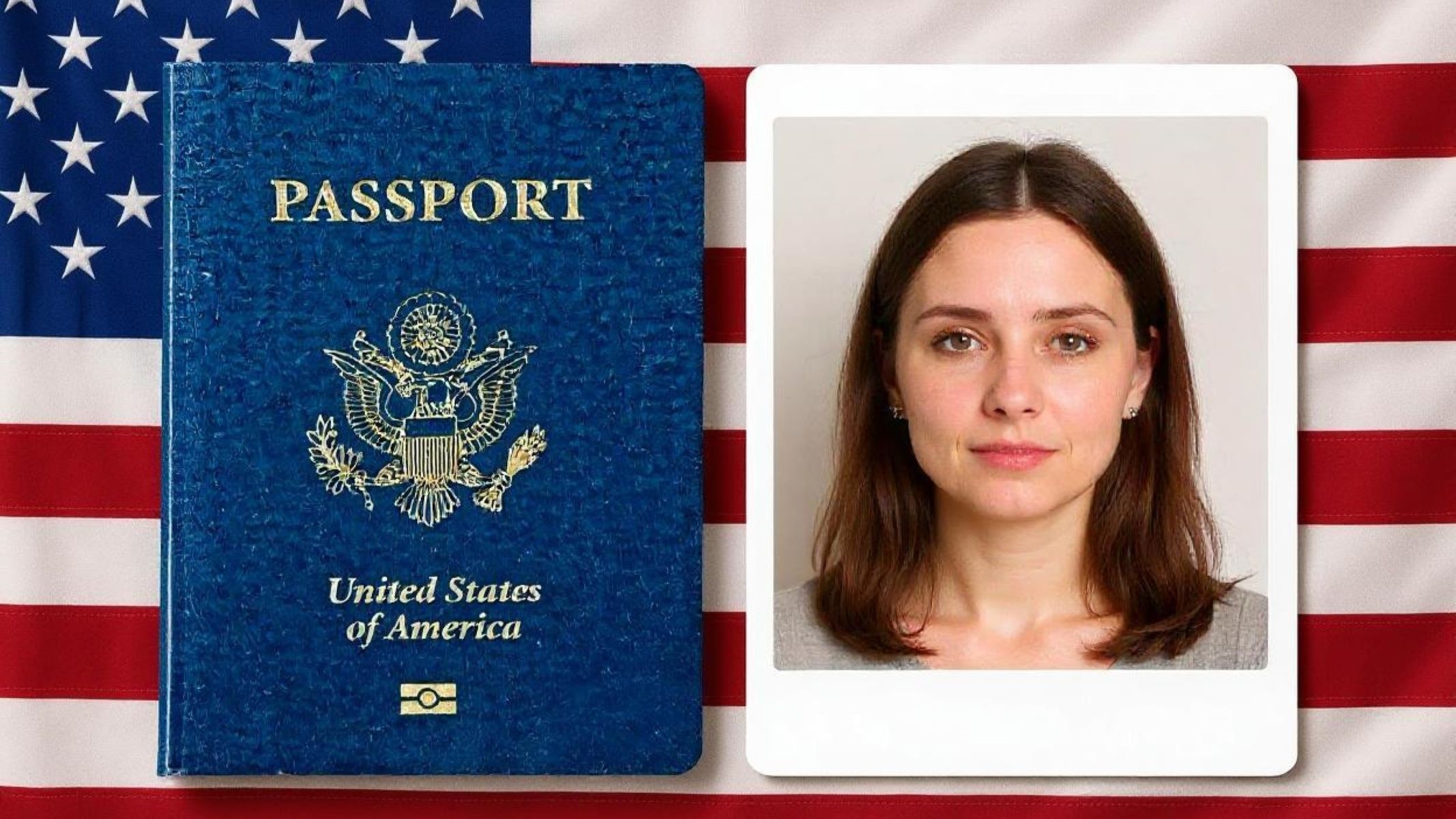
Getting your passport photo right can feel a little tricky, especially if you’re applying for the first time. With the shift towards digital submissions, understanding the us passport photo requirements has never been more important. Don’t worry — this guide covers everything you need to know about taking, preparing, and submitting your digital passport photo so your application sails through without a hitch.
Basics of Passport Photos
Standard Passport Photo Dimensions
In the United States, the passport photo size is strictly regulated to be exactly 2 x 2 inches (51 x 51 millimeters). This requirement applies equally to printed photographs and digital images submitted for passport applications. The reason behind this precise size is to ensure uniformity across all applications, which allows government systems to easily process and verify each photo. If the photo deviates from this dimension—even by a small margin—there’s a high chance it will be rejected. So, whether you print your photo at home or submit a digital file, it must adhere exactly to these measurements.
This specific size also corresponds to the size of the face in the image, which must be between 1 inch and 1 3/8 inches (25 mm to 35 mm) from the bottom of the chin to the top of the head. The framing ensures the face is clear and easily recognizable in official records. A photo that is too zoomed in or too far away won’t meet the requirement, so framing and cropping must be precise. Using photo tools or apps designed for passport photos can help you get these measurements right.
Digital vs. Printed Passport Photos
While printed photos are still accepted for many U.S. passport applications, the trend is increasingly toward digital submissions, especially with the growth of online application processes. Digital photos have distinct advantages: they tend to offer better clarity, faster delivery, and reduce the risk of physical damage or loss during mailing.
Digital passport photos must still meet the same strict size and quality standards as printed ones, but they offer the convenience of being uploaded directly on official government websites. This accelerates processing times and cuts down the need for physical prints. However, it’s crucial that the digital file meets resolution and format guidelines to ensure the photo is accepted.
Key differences include:
- Printed photos must be physically mailed or submitted in person, while digital photos can be uploaded online.
- Digital photos require adherence to pixel dimensions and file size limits.
- Printed photos are vulnerable to damage; digital photos avoid this issue but depend on file quality.
Importance of Following Photo Guidelines
Following the passport photo guidelines is not just a suggestion — it’s a strict requirement. Any deviation from official rules can cause delays or outright rejection of your passport application, which means waiting longer and potentially paying additional fees. For first-time applicants, this can be particularly frustrating.
The government has very specific requirements for everything from background color, facial expression, to head positioning. Even minor issues like shadows, glare from glasses, or an improper background can disqualify your photo. Remember, the passport photo is a key part of your identity verification process, so it must be clear, consistent, and standardized.
Important points to follow:
- Correct photo size and dimensions
- Plain white or off-white background
- Neutral facial expression (no smiles or frowns)
- Head centered and fully visible
- No accessories like glasses or hats (except religious headwear if it doesn’t obscure the face)
Ignoring these guidelines increases the risk of your application being delayed or rejected, so it’s better to get it right the first time.
Official Requirements for Digital Passport Photos in the U.S.
Size and Resolution Specifications
When submitting a digital passport photo, the U.S. Department of State requires your image to be of a specific pixel size to ensure clarity and proper reproduction. The photo must be at least 600 pixels by 600 pixels and no larger than 1200 pixels by 1200 pixels. This range helps maintain sharpness and detail without the image being too large to upload easily.
The resolution must be high enough to avoid any pixelation or blurriness. Pixelation can obscure facial features, which defeats the purpose of the photo’s role in identification. Images should be saved in JPEG format, which is standard for digital photos, and file size should generally not exceed 240 kilobytes. These technical specs ensure that the image can be processed quickly and clearly by passport agencies.
Summary of size and resolution requirements:
- Minimum resolution: 600 x 600 pixels
- Maximum resolution: 1200 x 1200 pixels
- File format: JPEG (.jpg)
- Maximum file size: 240 KB
- Photo dimensions: exactly 2 x 2 inches when printed
Background Color and Lighting Requirements
The background of your digital passport photo must be completely plain, typically white or off-white. No patterns, textures, or objects should appear behind you. This plain background ensures your face stands out clearly and meets the government’s standard for identification.
Lighting plays a critical role in avoiding shadows on both your face and the background. Shadows can distort your facial features or create uneven coloring, which will cause your photo to be rejected. Use natural or soft lighting to ensure your face is evenly lit from all angles. Avoid direct harsh light that causes glare or shiny spots on the skin.
Key points for background and lighting:
- Background must be plain white or off-white
- No shadows on the background or face
- Use even, diffuse lighting
- Avoid harsh or direct light sources
- No visible objects or textures in the background
Head Position and Facial Expression
Your head must be centered and fully visible in the photo, facing straight toward the camera. The passport photo must capture your entire face and shoulders, with your head neither tilted nor turned. This frontal positioning ensures that all facial features can be clearly identified for security and verification purposes.
Your expression should be neutral: this means no smiling, frowning, or raising your eyebrows. Keep your mouth closed and eyes open. A neutral expression helps maintain consistency across all passport photos and avoids any distortions caused by facial movement. Smiling or other expressions can sometimes change how your face appears, which complicates recognition.
Essential head and expression guidelines:
- Head centered and facing forward
- Neutral facial expression (no smile or frown)
- Mouth closed, eyes open and clearly visible
- No head tilt or turn
- Entire face and shoulders visible
Step-by-Step Guide to Taking a Digital Passport Photo
Preparing Your Environment
Before you start snapping photos, setting up the right environment is crucial. The most important element is lighting. You want to find a well-lit area that provides even, natural light. Ideally, this should be a spot near a large window during the day, where sunlight is indirect — think soft, diffused light rather than harsh, direct rays that cause strong shadows. Direct sunlight can create uneven lighting, harsh shadows on your face, or bright glare spots that will disqualify your photo. Avoid using overhead fluorescent lighting alone as it can cast unnatural colors or shadows. If natural light isn’t an option, try to use multiple soft light sources placed evenly around you.
Equally important is the background. U.S. passport photo guidelines require a plain white or off-white background with no objects, textures, or colors that distract. This means you can’t take a photo in front of a patterned wall, furniture, plants, or anything that draws attention away from your face. A simple white wall or a plain white sheet hung up works perfectly. Ensuring this clear, consistent background helps your face stand out and meets the official criteria.
Using Your Smartphone or Camera
Most modern smartphones have cameras capable of taking high-quality passport photos, but you need to optimize the settings. Always set your camera or phone to its highest resolution mode to capture every detail clearly. Avoid zooming in digitally, as this reduces photo quality. For the best stability and sharpness, use a tripod or place your device on a steady surface — shaky hands can lead to blurry images, which are unacceptable for passport photos. If you don’t have a tripod, consider propping your phone up on a stack of books or a table.
When positioning the camera, set it at eye level to avoid unflattering angles. The camera should be perpendicular to your face, neither too high nor too low. Avoid using the front-facing selfie camera since its resolution is often lower than the back camera, which produces sharper images. Also, make sure the lens is clean to avoid any smudges or blurs. Taking multiple shots is helpful — this allows you to select the clearest, most compliant photo.
Tips for Getting the Perfect Shot
The perfect passport photo requires you to look directly into the camera lens with your eyes open and mouth closed. Avoid tilting your head or turning your face; your head must be perfectly centered. Imagine a straight line from your eyes to the camera lens. Keep a neutral expression without smiling, frowning, or raising your eyebrows. This neutrality helps maintain a consistent appearance across different photos, making your identity easier to verify.
Make sure your entire head is visible in the frame, including your hair and shoulders. Don’t crop too tightly, as the photo needs some space around your head to fit official size requirements. Take multiple photos to give yourself options. After taking the photos, review them closely to check for shadows, reflections, or any background distractions. Remember, a clear, high-quality image with proper framing is key to acceptance.
| Step | Key Details | Tips & Tricks | Common Pitfalls to Avoid |
| Prepare Environment | Find a well-lit area with a plain white or off-white background. Use natural light if possible. | Use indirect sunlight; avoid shadows and harsh light. | Don’t use patterned or colored backgrounds. |
| Camera Setup | Use highest resolution setting on your smartphone or camera. Use a tripod or stable surface. | Clean your lens; set camera at eye level; avoid selfie cam. | Don’t use low resolution or shaky shots. |
| Pose and Framing | Face camera straight on, keep neutral expression, eyes open, mouth closed. | Leave space around head; take multiple shots. | Avoid head tilts, smiles, or cropping too tight. |
Common Mistakes to Avoid
Incorrect Backgrounds
One of the most frequent errors applicants make is using backgrounds that do not comply with passport photo requirements. Busy, colored, or textured backgrounds distract from the face and violate official guidelines. For example, taking a photo in front of a patterned wallpaper, curtains, or furniture can cause immediate rejection. The government requires a plain white or off-white background to ensure maximum contrast between your face and the backdrop, allowing clear recognition by facial recognition software and human inspectors alike.
Avoiding these backgrounds means choosing a simple wall or using a white sheet or backdrop. Also, make sure no objects, shadows, or other people appear in the background. Even small distractions can affect the acceptance of your photo. If you’re unsure about your background, take a test photo and look closely to ensure it’s smooth, uniform, and free of patterns or colors.
Poor Lighting and Shadows
Lighting is a make-or-break factor for passport photos. Uneven lighting can cause shadows across your face or on the background, which can obscure important facial features. Shadows under the chin, nose, or around the eyes create visual distortion and reduce the photo’s quality. For example, lighting coming from one side only will create harsh shadows on the opposite side of your face — this is unacceptable in official passport photos.
Use soft, diffused lighting from multiple angles or natural daylight filtered through a window. Avoid harsh overhead lights that create strong contrasts and shadows. Make sure your background is evenly lit and there are no shadows cast behind you. Shadows reduce the image clarity and can cause your photo to be rejected, delaying your passport application process.
Blurry or Pixelated Images
A passport photo must be sharp, clear, and in focus. Blurry images make it difficult to identify your facial features accurately. This often happens when the camera moves during the shot, the lens is dirty, or the resolution is too low. Pixelated images—where individual pixels are visible or the photo looks blocky—result from low-resolution images being stretched or saved incorrectly.
To avoid blurriness, stabilize your camera on a tripod or steady surface and ensure good lighting to allow the camera to use a fast shutter speed. For pixelation, always use the highest resolution your camera allows, and save your photo in JPEG format without excessive compression. Review your photo on a larger screen before submitting to make sure it’s crisp and clear.